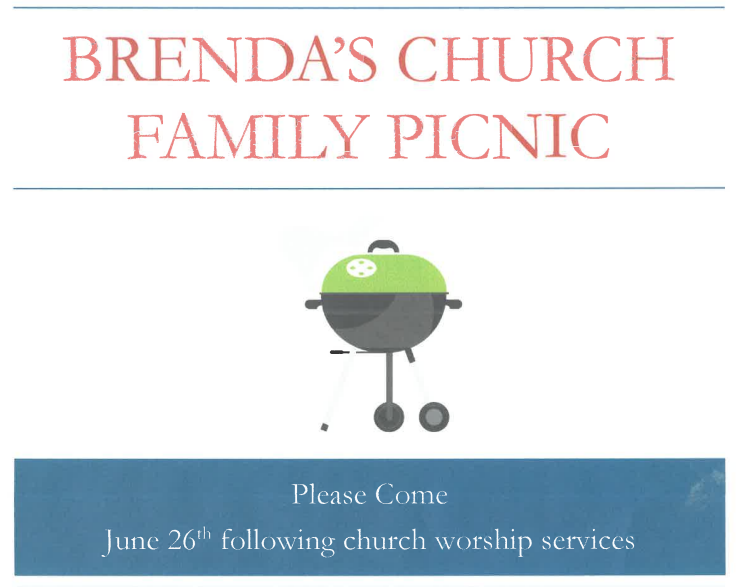
See the PDF below for more information!

First Baptist Church of Manistique
Friends pointing the way to a safe harbor through the light of faith in Jesus Christ.
See the PDF below for more information!
In the beginning of Ruth 2, we come across Ruth and Naomi, two intrepid widows joined by the bonds of love, yet dealing with a practical problem: they don’t have food and they don’t have money, so how are they going to survive in Bethlehem, where they recently returned? They have fallen in a gap and there is no financial plan for the future which covers them.
They are in this situation primarily because their husbands have died, they have been absent to a different country for a decade, and they don’t have clear access to what they need. The land that Naomi owns, which we will find out about only in chapter 4, has somehow fallen either into disuse or into the de facto control of someone else. If in disuse, it was not planted so they would get no food from it for an entire calendar year (they are at the beginning of harvest time now, and there would not be another harvest for a year). Or someone else from within the clan of Elimelech is using it, and they are loath to give back from the work they have put into it. Whatever the case, Naomi and Ruth don’t have food, don’t have a job, and don’t have a husband, so they fall back on the social safety net to stay alive.
In today’s terms, the social safety net involves webs of governmental programs, non-government organizations, and charitable groups (like this church) who help through food, finances, provision of places to stay, training, etc., when someone is in a position like Naomi and Ruth. In our time, the logical place for Naomi and Ruth to begin would be to go and apply for food aid through some governmental program. But nothing like that existed in ancient Israel. What to do?
Ruth comes up with a plan falling back on a well-known and oft-practiced practice in their time and place: gleaning. Gleaning refers to going through a field which has been harvested and picking up the leftovers from the harvest. There is certainly food to be had, but it is long, hard work and the returns for the efforts are quite small compared to those returns from harvesting.
The right for widows, orphans, and destitute to glean in ancient Israel is enshrined in the Law. Leviticus 19.9-10 is one of the many places which say the same thing:
9 “‘When you reap the harvest of your land, do not reap to the very edges of your field or gather the gleanings of your harvest. 10 Do not go over your vineyard a second time or pick up the grapes that have fallen. Leave them for the poor and the foreigner. I am the Lord your God. (NIV)
During harvest, the owners of the field were to leave a certain amount of the field—probably around the edges—standing. The gleaners could go through here. Also, in the harvesting process, anything that got dropped as the harvesters used their sickles or bound the stalks into bundles, was to be left for the gleaners. While a far cry from a social security check or a WIC card, these provisions accomplished the same basic outcome: those who had resources were to provide for those who didn’t.
All these commands rest on the same basic premise: God is the owner of the land. God gives land to the different tribes and families as their possessions, but he does not forfeit ownership of the land. He still reserves the right to tell them what they may and may not do with it. And one of the things that all owners of the land are required to do is to allow gleaning so that those like Ruth and Naomi who are socially destitute and don’t have land and don’t have the means to survive are still able to get food.
So that’s what Ruth is up to. She is falling back on the social safety net as a means to survive in her destitution.
I want to take this as a jumping off point for a brief comment about planning for the future. Ruth and Naomi are in a pickle because the social means they had to plan for future security have failed. Their husbands died and they have no children. Thus, their only recourse is the social safety net of picking up stray heads of grain which happened to fall in a field.
There is nothing desirable about Ruth and Naomi’s position at this point. Imagine with me, for a minute, how Elimelech and Ruth’s former husband (Mahlon, as we find out in chp 4), would feel about what is going on. They certainly didn’t plan on dying, but if they could have prepared some way so that their widows did not have to suffer, I imagine they would have. Now, in an agrarian society there is not much you can do to prepare to provide for your loved ones in the event that you die. We are in a different situation today.
I just want to encourage you to think about those who are financially dependent on you and what ways, if any, you are planning to provide for them in the event you die or become unable to work in some other way.
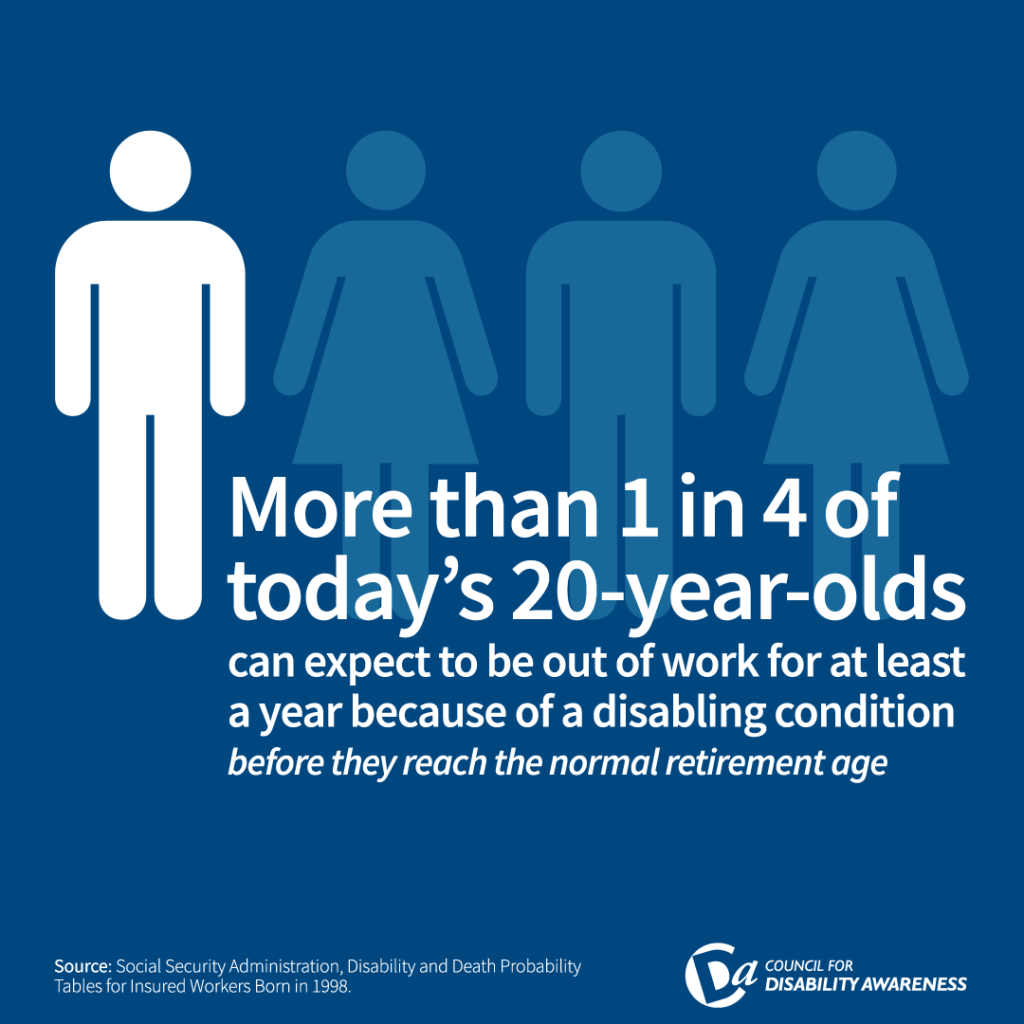
Did you know, Social Security estimates that roughly one of every four people in their 20s today will experience some sort of physical disability limiting or removing their ability to work for a year or longer in the course of their lifetime? How many of us are financially prepared for losing a year of income? Are you prepared to provide for your loved ones in the event that you lose the ability to work or die? These questions are worth thinking about as we see this example of Ruth and Naomi scrambling to survive because that’s the only thing they’ve got.
Making financial plans for the future is a sensible part of being good stewards of the money and resources God has given to us. In church, there’s often talk about what you do with 10% of your money and the importance of giving. And that’s all important and there needs to be a time to talk about that. But consider that God expects us to do wise and faithful things with 100% of the money and possessions that we have, not just 10%. And one wise principle to follow from scripture and seen from life is to plan on a loss of ability to work and possibly the loss of your life prematurely. What ways can you lessen the impact such an event will have on loved ones who are dependent upon you?
This calls for thinking about things like savings accounts, life insurance, disability insurance, and investments. Not everyone can afford such things, but if you have margin to do so, they provide a wise way to limit the likelihood that your family members will be falling into poverty and desperation in the even that you die or lose the ability to work. In fact, it is worth considering how to make margin in our lives to afford such tools.

Part 1 of this 4-part series provided the key orientation point: provoking a child to anger is a covenantal concept. It does not mean, “don’t do anything that will make your child get mad/angry/exasperated.” Wise and godly parenting will often result in children getting angry. Drawing from usage of the phrase “provoke to anger” in the Septuagint (Greek translation of the Hebrew Old Testament), we see the main context of usage is a right response of anger when justly held expectations in a relationship are violated.
Putting that into terms of “provoking a child to anger,” we can say that parents provoke a child to anger when they act towards their children in ways that violate the justly held relational expectations that children have of parents.
This is a good place to start, even if it’s really broad. It points us on a clear direction of inquiry. As parents, we need to give thought to what children can justly expect to receive from us in the parent/child relationship. Some of these expectations are clear. Children justly expect their parents to protect them (especially before they are grown up), and parents who use their greater power to hurt rather than guard their children are “provoking them to anger.” Children justly expect their parents to love them and parents who do not do so are “provoking them to anger.”
When we situate “provoke to anger” within its covenantal context from the Old Testament, one result within parent/child relationships is it appears to cover a range of negative responses from children, not just anger. A child physically abused by their parents may respond in anger or may respond in sullenness and fear. A neglected child may have angry outbursts or may withdraw from the world. In either case, the response is driven by parents violating the justly held relational expectations of the child and would seem to fit under the idea of “do provoke your child to anger.” Compare to the parallel passage in Colossians 3.21.
Just to be clear, when I am talking about what children justly expect from their parents, I am not talking about things they even know how to articulate. That will be age dependent. Rather, I am talking about things understood from Scripture and nature about the needs of a human being in the journey towards adulthood. A two-year old won’t know how to express in words that their parents are not emotionally engaging with them. But they clearly understand something they need is being withheld by their parents.
Like most of the biblical passages in Scripture, guidance for parenting aims mainly at the goals rather than the details. As a generalization, much of the biblical material answers the question who we should be rather than the question, “What should the detailed decisions of our lives involve?” We still can step back, though, and distill some guidance on what children can expect from their parents within a sort of “covenantal” context of parent-child relationships.
In the next two posts, I want to take up these concerns from two different directions: (1) psychology and human development and (2) biblical teaching.
In part 3, I want to take up some key categories borrowed in from the world of psychology and human development. Of course, one could take the time to try to argue that all these categories are supportable from somewhere in Scripture, and they probably are, but I’m not going to do that. They are sufficiently broad and deep enough concepts to engage with some of the core experiences of growing to maturity as a human being. They are rooted in how our physiology and neurobiology function. In other words, they simply address some of the basic needs people have in order to grow up into normal, functioning adults.
In part 4 of this series, I will turn to some more specific biblical themes. After all, raising healthy, successful children is wonderful, but it is a far cry short of the biblical mandate. God’s intentions for parents include other key ideas and children have an inherent right to receive them from their parents.
The end goal of these two posts is to answer some of the question, “What sorts of things should parents be providing for their children?” In answering this question, we are also at the same time giving ourselves a framework for processing our children’s anger. Are they angry because of a failure to give them something they rightly expect, or are they angry because of sin in their own heart (which calls us to help them understand how to deal with sin in their own heart)?
As one writer puts it:
“Beginning with the first day of life outside the womb, every child is asking two core questions: “Am I loved?” and “Can I get my own way?” These two questions mark us throughout life, and the answers we receive set the course for how we live.”
Dan Allender, How Children Raise Parents: The Art of Listening to Your Family, 21
In answering these questions day by day for our children, they will undoubtedly get mad at us. Our concern is to tune in to the way God created human beings to function and the directions he gives us as parents so that we can get a better idea of when the anger of our child is their own sin and when the anger of our child is provoked by our sin towards them.
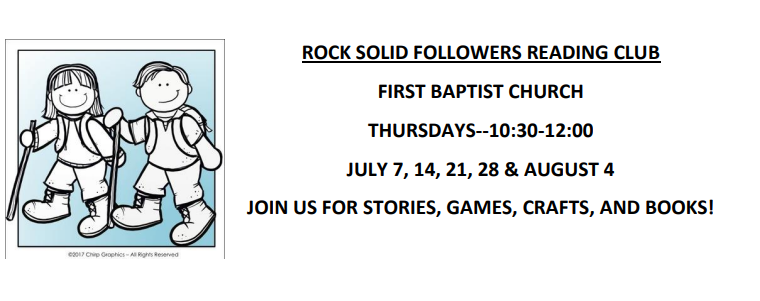
(Children’s) Summer Reading Club is coming soon! Please see the image and registration form below for more information. The registration form can be downloaded here.
Here we are again. Another person has decided to take a gun and kill a bunch of people. And it just so happens that this person is strikingly like a lot of other people who have done similar things: a male, white, and sharing a certain racial ideology of the world.
Is this a problem of race? Is this a problem of gender? Is this a problem of gun control? However we talk about and try to answer those questions—and I think that we do need to talk about them and try to answer them—there is some deeper issues that we need to not lose sight of.
The knee-jerk responses of gun-control activists and right-to-bear-arms activists around each mass shooting is to become further entrenched in their own position. To take the new data, integrate it into their existing belief set, and yell louder about how right they are.
The knee-jerk responses around issues of race are the same. Are people racist? Are racial disparities driving everything in our country? Some cry “yes,” and others cry “no,” and what happens in the meantime is more of the same.
The discussions which ensue following such a shooting as just happened in Buffalo (and, don’t forget, several other shootings around the country in that same time period) are predictable. All sides say the same things over and over again. In the clamor over gun control and race/racism, one wonders how much ever will change. How much is even heard?
It is not my intention here to argue for or against gun control. Of course, if this young man in Buffalo was not able to buy the gun then he would not have been able to shoot so many people. That is self-evidently true, and an important point to wrestle with in forging local, state, and national policy on guns. Yet it is an underwhelming place to focus on.
It is not my intention here to tackle the protracted issue of race and racism. Assuming the reports about the shooter are accurate, it is easy to see he was fanatically racist.
But where does pointing out those self-evident truths leave us? With a pile of dead bodies, ever-growing, and no obvious way out of the course we are on.
As I think about the reports coming out of Buffalo, Southern California, and more, a few things cross my mind.
Sorrow. It pains me to think about the lives that have just been shattered. Those who died. Those who are dying. Those who will now be wrestling with the hurt stemming from a loss of innocence and hope.
Anger. I am angry that we live in a mass-shooting, rinse, and repeat culture. For a saddening list of mass shootings in the US this year, see here. I am angry that we live in a culture where local kids make plans to go to their schools and shoot people they don’t like. I am angry that too often those plans materialize into reality. I am angry that hopelessness is so rife in our culture that killing others, or killing oneself, seem like good solutions to so many people.
Curiosity. I am curious where the disconnect is in the lives of so many. Where did this young man get the ideas of racial superiority and violence from which somehow made his life make sense? Where does hopelessness come from in the lives of many who take guns to others or to themselves? I wonder what it would be like to sit down with this young man who just killed so many people in Buffalo and have a heart-to-heart conversation asking, “What do you hate so much about yourself and your life that the only way you know to express your pain is in giving deep pain to others?
I don’t know what to do.
I’m not sure that “doing something” will ever fix what is around us, though I suspect and hope there are lots of ways to improve the cycles of violence and racial ideology which the recent shooter in Buffalo put so clearly back in our view.
I suspect there are policy decisions that could lessen the frequency of gun violence. I suspect there are mental health services which could help. Those are discussions to be had.
Right now, I am more concerned with something deeper. Something whose lack is rather troubling.
Empathy.
The shooter’s racial ideology is completely devoid of empathy. There is no real attempt to consider the lives of black people as other people in the world trying to make their way. Or, if talking in terms of race is too bold for you, there is no real attempt to consider the lives of other human being as people in the world trying make their own way. In the moral imagination of the shooter, it seems these other human beings had little more significance than ants that might be stepped on.
How does one live with so little empathy?
The very act of taking up a gun to shoot other people displays a pronounced lack of empathy. Someone steeped in empathy may fight and kill at times, but understands that fighting and killing is not a way to escape your own pain. Shooting others is not a way out of troubles, not a way out of the prisons you already live in in your deepest being.
Gun control discussions and debates need to happen, and they will. Further discussion and debate about racial ideology needs to happen, and it will. Discussions of mental health, poverty, bullying, socio-economics, etc., need to happen, and will.
These are not, though, and won’t be quick solutions to the problems which lead us to Buffalo. The most recent in a long line of such shootings.
There are no quick solutions. No easy way to go from “here we are” to “there we want to be.”
As I look at the world around us, I am challenged to think of a different question than how do we get white racists to stop shooting black people. I am challenged to think of how we assault the world with the sort of compassionate empathy which Jesus showed, and still shows.
This kind of empathy can rock hearts to their rocky depths.
This is also the empathy that got Jesus killed.
My kids get mad at me. A lot. I don’t say that as a point of pride, merely an observation of the status of life in our household. Now, I am certain there are many times when their anger is a legitimate and healthy response to something I have done that is not right. One could say that I (more often than I care to) provoke my children to anger.
And all this happens in a context where I hold dear the admonition of Scripture as found in Ephesian 6.4:
Fathers, do not provoke your children to anger, but bring them up in the discipline and instruction of the Lord.
What does my children getting angry at me mean? Am I sinning? Should I be avoiding all things that result in them getting angry? What exactly is “provoking them to anger,” anyway?
It is worth establishing some basic ground rules from our experience. From life in the trenches, we know that anger happens a lot. Even in “healthy” households. We will start with our experience and then move back and consider the ideal that Scripture gives.
A simple observation to begin with: not all anger is the same. In other words, sometimes my children’s’ anger towards me is righteous anger. They are angry because I have acted toward them in a way that is sinful. When someone violates the integrity of our person, anger is a natural response. Just like we as adults get angry when people wrong us, so too our children. At the beginning, let’s just be honest that sometimes our kids get mad at us because we “provoke them to anger” by sinful actions towards them.
But what about when they get mad at me for things like:
Wisdom from life tells us that this sort of anger is not the same as the first. I can affirm that my children are, in fact, angry and that my actions have provoked them to anger. After all, if I just let them watch the show there would be no anger right now. And yet, life experience and wisdom also tell us that these sorts of parental actions are necessary. When parents do not take it upon themselves to impose wise choices upon their children, the result is a disaster of a child that all too often turns into a disaster of an adult.
As I write this my children are still young, and it is easier to see that their anger is not justified (assuming that I am enforcing wise choices upon them in a loving way, which is not always the case). What happens as children get older? How do we understand when our actions are “provoking a teenager to anger,” for instance?
While I don’t have a definitive answer for the complexities of being a sinful parent raising sinful children, I can point us to a deeper understanding of what this passage in Ephesians 6 is saying. And the key here is a covenantal context.
To begin, let’s revisit Ephesians 6.4. Here is a smattering of ways it is translated:
There is clear consensus on the last half of the verse: train and instruct. The first half of the verse describes something negative, with notions of wrath, exasperation, and anger. But what does that mean in real life?
First, just note that the command to “fathers” is best understood today as a command to parents. We could delve into language and culture details as to why that is the case (and if you want some of that, just ask me!), but just know that it encompasses parents in general.
I would advocate translating this passage something like: “Parents—and especially you, fathers—do not provoke your children to anger.” This accounts for the fact that the text is primarily directed at men within its original context while also acknowledging the realities of the modern family, and the myriad of different authority structures which are present therein. From single-parent homes to homes with present but absentee fathers, etc. The point of the passage addresses a reality that parents are able to parent in such a way that they exasperate their children.
To understand what “provoke to anger” refers to, we have to consider just what Paul is doing in this brief exchange. Starting from Ephesians 5.21, Paul is discussing the normal relationships of human life in his day in terms of gospel submission: wife and husband, child and parent, and slave and master.
Let’s look at Ephesians 6.1-4 a little closer:
Children, obey your parents in the Lord, for this is right. 2 “Honor your father and mother” (this is the first commandment with a promise), 3 “that it may go well with you and that you may live long in the land.” 4 Fathers, do not provoke your children to anger, but bring them up in the discipline and instruction of the Lord.
In this passage Paul cites directly from the 10 commandments regarding how children are to relate to their parents (Exodus 20.12). In v. 4, he alludes to Deuteronomy 6—the Shema and the immediately following verses—about the responsibility of parents to teach the words of the covenant to their children. In both parts of the child/parent relationship, then, the expectations laid out are grounded in terms of God’s covenant. That is, they are covenantal.
Said differently, Paul is not giving parenting advice or tips about how to deal with kids or parents like you would find in the self-help section. Instead, he is unpacking how the truth of God being a covenant God who reaches out to us in the gospel of Jesus Christ provides a framework for being a child or being a parent. While this passage is detail-sparse in terms of what boots-on-the-ground parenting looks like, it is profound in giving us a guiding vision.
But there is more we can say than just that it is a guiding vision.
Paul shows us that being a child and being a parent is framed within God’s covenant. We might say that there is an implicit covenant between child and parent where each party has obligations to the other. When each party fulfills those obligations, the result is harmonious and mutually beneficial.
Since I have mentioned “covenant” a few times, it is worth defining. Covenants are formal relationships characterized by faithfulness and loyalty in love. There is clearly no “formal” covenant in families. However, in the biblical view, family is strongly covenantal. There is a stronger and a weaker party (the parents and children, respectively), with obligations placed upon each party. The stronger—parents—is to act for the benefit of the children in areas like provision, wise instruction, discipline, and so forth. The primary response of the weaker party—the child/children—is respectful obedience. For a good description of family dynamics as portrayed in the OT and NT, see God, Marriage, and Family: Rebuilding the Biblical Foundation, 2nd ed., chapters 5-6).
Setting aside the fact that our relationships with children are often full of disharmony and antagonism (thank you sin), the aim is for harmony and mutual benefit. This view stands behind Psalm 127.4-6:
Behold, children are a heritage from the Lord, / the fruit of the womb a reward. / Like arrows in the hand of a warrior / are the children of one’s youth. / Blessed is the man who fills his quiver with them! / He shall not be put to shame / when he speaks with his enemies in the gate.
This passage shows an ideal: harmonious and mutually beneficial relationships between the parents and kids. No one counts it as a blessing when parents and children are characterized by mutual antagonism, violence, distrust, or other negative relational markers. But when all is well, both parents and children are blessed from the covenantal relationship of the family.
Why am I bothering to talk about covenants? Well, it turns out that “provoke to anger” is used almost exclusively in covenant contexts in the Septuagint.
The Septuagint is the Greek translation of the Hebrew Old Testament which is freely used, alluded to, and cited in the NT.
The word translated variously as “provoke to anger, etc.” (it’s παροργίζω, if you want to know) is used 57 times in the Septuagint. Far and away the most common context is that the Israelites provoke the Lord to wrath by their sin. It is also used of general relational violations. We might summarize its dominant usage as follows: being “provoked to anger” is a result of the other party in the covenant failing to live up to the terms of the covenant.
Consider a concrete example. God, the covenant maker, tells the Israelites, “You shall have no other gods before me.” When the Israelites worship other gods, what happens? God is provoked to anger. Why? Because they are violating the terms of the covenant. The expected behavior of the covenant partner is not kept (the Israelites are worshipping other gods). The result is that God is “provoked to anger.”
From the side of the people of Israel, if they keep the covenant faithfully, they expect God’s blessing. If God were to withhold his blessing from them, even when they were being faithful, then God would be “provoking them to anger.” Of course, this doesn’t happen. But it is illustrative. In a covenant, both parties have responsibilities towards each other. The bulk of the responsibilities rest on the stronger party.
This I think is the heart of “provoking to anger:” it has to do with violation of justly held expectations and rights. God is angry with the people because they have broken the covenant terms. Provoking to anger is accomplished through treating the other party wrong in the very arenas of life where they have just expectations to be treated right.
And one more thing to note. The core purpose behind the covenant is to facilitate a relationship between parties characterized by faithfulness and loyalty in love.[1]
This post is already too long, but I want to briefly sketch out where we are going in the next post. If being a parent is like part of a covenant, then we are to understand “provoking to anger” in a specific sense. Parents “provoke their children to anger” not whenever they do something that their kids get mad about, but when parents violate the terms of the parent/child “covenant.” Making your child finish their homework before going out with their friends may make them get mad, but, if done rightly, falls within the purview of parents teaching their children the wisdom necessary to thrive in this world. That is not provoking your child to anger in the sense of Ephesians 6.4.
With all the anger responses which parents so regularly receive from children, though, what can guide where we aim in thinking about our relationship with our children. After all, sinful parents raising sinful kids means there are lots of opportunities for things to get gummed up. What should we aim at?
To that, we will turn in the next post.
[1] Peter J. Gentry and Stephen J. Wellum, God’s Kingdom through God’s Covenants: A Concise Biblical Theology (Wheaton: Crossway, 2015), 54.