
Informer for May, 2022
May 1 Church Service Video
National Day of Prayer
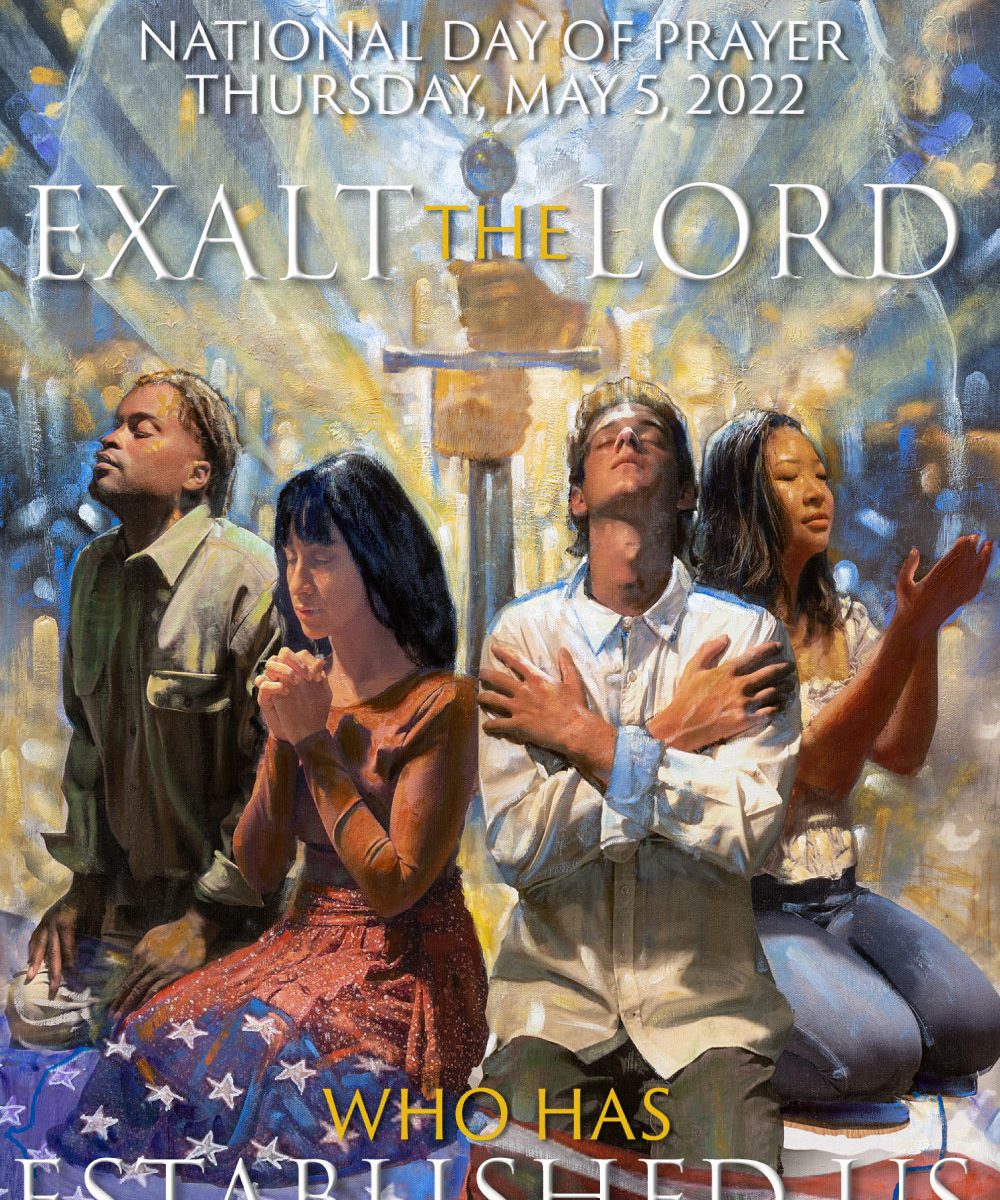
National Day of Prayer is right around the corner. The theme this year is Exalt the Lord Who Has Established Us.
Come join us and other churches in the community on May 5th for a time of prayer focused on our nation and community. Everything will be centered at the Jared D. Martin Memorial Pavilion right next to the church. We will focus on praying from 7 am-7 pm.
Come if you are able. To sign up in advance for a time you will be there, use this link. There is no need to sign up. If you have a minute–or a bunch of minutes–throughout the day, just drop by and pray.
April 24 Church Service
April 17, 2022 Church Service
The Resurrection of Lazarus and the Resurrection of Jesus
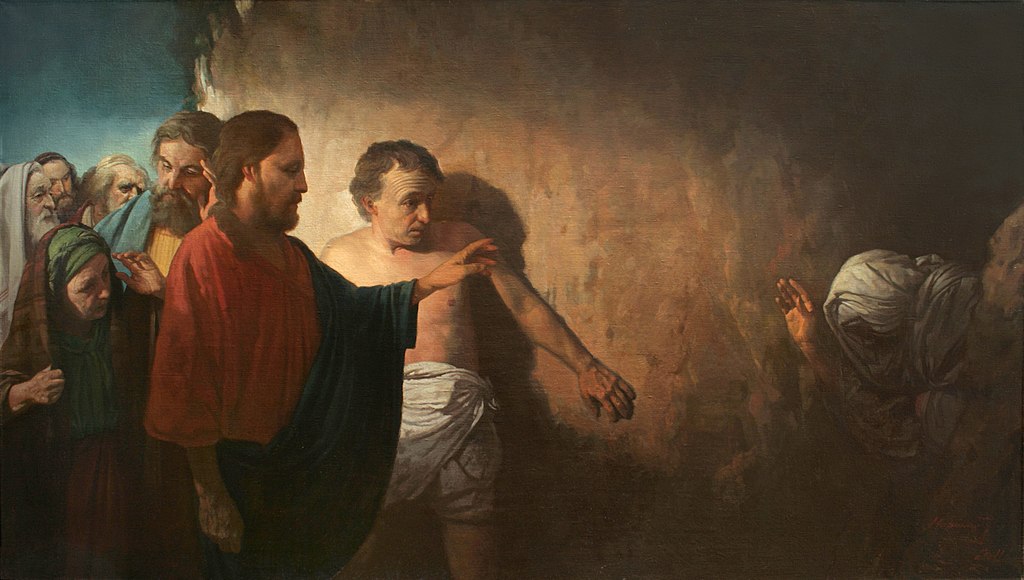
Here is my short message from the Easter Sunrise service. It is based in Ezekiel 37.1-3 and John 11.17-27.
Ezekiel
In Ezekiel’s vision he saw a valley of dry bones. A valley of death. And God asked him,
“Son of man, can these bones live?”
Ezekiel answers,
“O Lord God, you know.”
The vision continues with God having Ezekiel prophecy over the bones, and they receive flesh. Then he prophecies to the wind, and they receive the breath of life.
Of course, in Ezekiel, the prophecy concerns the people of Israel, who are like a valley of dried bones. Lifeless. In the prophetic vision, God shows himself as one able even to raise the dead, to rebuild bodies that had crumbled away into dust.
But then what? After all, Israel had died once already, becoming like a valley of dried bones. Of what good is a resurrection if it does not actually escape death. Resurrecting a valley of dried bones allows them to take a vacation from death, but it seems like death is once again the final destination.
Indeed, more than a few people are brought back from death as recorded in the OT. There is the son of the widow whom Elisha raises to life again. Or the rather random story where a dead body was hastily thrown into the tomb of Elisha. When the corpse touched his bones, the man came back to life again.
But nothing changed. The widow’s son lived to die another day. Likewise, the unnamed man whose corpse had the fortune—or misfortune—of touching Elisha’s body and revivifying, also died again.
Resurrection from the dead, you see, doesn’t actually change anything. All alike proceed on to Sheol.
Lazarus
Consider now the resurrection of Lazarus. He is the last named of various people Jesus raised from the dead in his ministry: Jairus’ daughter and the son of the Widow of Nain being the other two we are told about. Lazarus, the friend of Jesus, was dead some four days, and Jesus called him back. Back to what? To life, yes. But what sort of life? What had really changed for Lazarus? About him?
While the idea of resurrection from the dead has a certain appeal to it, perhaps a fleeting glimpse of the immortality that people long for and hope for, in truth, the resurrection of Lazarus is a cruel trick, if that is all you have to offer. To bring someone back from the dead is of no great advantage if they only will die again.
Throughout the Gospel of John, Jesus teaches that he has come to bring eternal life. What does he mean by that somewhat enigmatic phrase? That existence will keep going on? That our hair will grow grayer forever, are aches multiply, and our memories dwindle? That, if one of his followers happens to die, he will raise them back to life again?
An eternity of resurrection unto dying again is an endless cycle of pain, not a deliverance. With Lazarus we see death set aside for a time, but only for a time. He travelled into death, was pulled out again, but there was only one place for him to go: back into the arms of death again.
The question posed to Ezekiel is “can these dry bones live?” The question posed by the resurrection of Lazarus is, “What sort of ‘resurrection and life’ is Jesus, anyway? Is resurrection worth it?”
Jesus
In John 11.25-26 Jesus says,
“I am the resurrection and the life. Whoever believes in me, though he die, yet shall he live, 26 and everyone who lives and believes in me shall never die.”
As Jesus stands before the dead man Lazarus, he does not just claim to be able to bring back life—as he has done before and is about to do again. Lazarus will come forth from the tomb. The dead man will walk out alive. But that is not all Jesus is talking about. He claims to be life. He is the resurrection and the life.
In the death of Jesus, Life is killed. The Resurrection is sent to the grave. And it appears that all hope is lost. It appeared that Death had finally triumphed. That God’s creation was doomed forevermore to Sheol. For if even “The Life” is sent to Death, then what hope is left?
If Death is the enemy, the lord over us, and Jesus is The Life, the question to be answered is whether Death is, in the end, stronger than Life. After all, bringing people back from the dead does not deliver them from Death. So long as nothing changes, death is the only destination to which all or going.
But on Easter morning, everything changed.
The resurrection of Jesus from the dead is not a vacation from death, as the resurrections before him. The resurrection of Jesus is a tear in the fabric of reality through which a newer, more real reality shines through. Through that tear, a whole new creation steps in, bright and clean, into the drab and dusty confines of this present world. A life everlasting. The Life which is stronger than death and cannot be contained in Sheol.
In Jesus, The Life is not just called back from death—this is no “near death experience” or “15 minutes in heaven.” This is not even Lazarus, the dead man, called back to life. It is Life which has gone down into Death and emerged triumphant. Jesus, the undead, the deathless, the dead who is dead no more, wields power over Death, the great enemy.
In the resurrection of Jesus, we see what is to come. We find hope. Hope that life is not just a one-way trip to death. Hope that, yes, the dry bones can live again. They can live because Jesus has an invincible life. Is Life Everlasting. All who believe in him, though they die, will live. Because Jesus can go down into death with them and bring them through it into True Reality. The New Creation where death has no place because Jesus has conquered it, banished it, and all who stand in Jesus’ hands are forever outside the reach of death.
Jesus is resurrection. Jesus is life.
As he stepped out from that tomb, everything had changed. Where, o Death is your sting? Jesus has taken it, tasted all your poison, and yet has walked out of you, triumphant.
Jesus says, “all who believe in me, though they die, they will live.” Death, the former end of all things, has become merely a waypoint along the journey to Life Everlasting. The hope of the follower of Jesus is that death is merely a vacation from life as we journey on in the trail blazed by Jesus—the trail through death into life. The Resurrection has triumphed and turned Death into a great doorway to Life Everlasting.
Amen.
The picture at the top is an oil painting, Andrey Mironov, CC BY-SA 4.0 https://creativecommons.org/licenses/by-sa/4.0, via Wikimedia Commons
April 10 Service Video (No picture, just audio)
Part of the “Stories with Intent” sermon series on Jesus’ major parables.
Bible-reading second-handers
The truth about books: there are a lot of them
Recently I came across an old article from the early 2000s (well I guess it’s not that old) about reading and literacy rates. The author pointed to a certain Pierre Bayard who wrote a book entitled How to Talk About Books You Haven’t Read. Full disclosure: I haven’t read the book 😊. Maybe someday. Right now, I am busy reading books that I aim to talk about. All joking aside, it’s a funny sounding title and the idea of it is a little funny, though in practice it is not that strange. Many readers are second-hand readers.
Due to the sheer volume of things which are written and have been written and will be written, no one can read more than an infinitesimally tiny percentage of what is written and what is relevant for their interest. It is estimated that somewhere greater than 2 million new books are published every year around the world. A very dedicated reader may get through 100 or so books in a year, maybe a few more. Good luck.
In the academic context where I have been living the last several years, it’s actually quite common to discuss works one has either not read at all or read only in small part. Each subject matter and discipline has a sub-discipline within it that is devoted simply to keeping track of the history of the area of study. Whether you read theology, biology, the history of UFO hunting, or what have you, a huge portion of one’s knowledge about their subject matter comes from summaries of other books (or summaries of summaries of summaries, etc.). There’s only so much time to read, and more to read than could ever be read.
Talking about the (multitudinous) books you haven’t read
And so, part of me empathizes strongly with the basic point of this book (which I haven’t read). One who is generally knowledgeable about history, about current cultural trends, and about life, can talk about all kinds of books they haven’t read, movies they haven’t seen, TV shows they haven’t seen, places they’ve never been to, and other life experiences they’ve never had. It’s a rather peculiar aspect of humanity. We can persuasively and convincingly talk about and even coach other people through things that we have no practical experience with.
Are we “bible-reading” second-handers?
Setting academia, or hobby reading, or book clubs, or even schoolwork aside, does the habit of discussing things we haven’t read or seen seep into the life of following Jesus?
The world of Christian book publishing churns out an astonishing number of books. And, to be more honest with the way we engage with text, we have to consider blogs (like this one), magazines, YouTube channels, movies, podcasts, cartoons, etc. There is an entire swarming ecosystem of stories, information, and studies which promise to help you understand the bible, help with your Christian walk, improve your love life, improve your relationships, lessen your stress, make you happy, etc.
I don’t want to sound dismissive of the Christian literary apparatus which helps us understand the Bible and the Christian life. I myself have drunk deeply from many springs in this apparatus. It would be the height of arrogance to suggest that we don’t need to read what others have written and thought and taught, but should just read the bible and figure it out on our own. Yet a question calls for pondering: Have we become bible-reading second-handers?
That is, do we always engage the bible through a screen of someone else’s writing. We read someone else’s study, someone else’s blog post, etc. The default assumption in the information economy is that an answer, if not the answer, is already out there and someone has already figured it out. All you need to do is search for it online and it will pop up within the first 10 Google results.
The problem which I see in all of this is not that we don’t learn—one can learn an immense amount of information through second-hand reading engagement (or watching videos, listening to podcasts, etc.). The problem is that second-hander knowledge tends to be less transformative than first-hander knowledge.
An Illustration
Here’s the difference. I ran track and field in high school. I was phenomenally not good at anything in it, but I did do it. In one track meet my junior year, my coach decided to throw me into the high jump.
Up till that point, I had never competed in, or really practiced, high jump. However, I did know the theory of how you high jump. I know the sort of approach you’re supposed to take, the way you plant your feet, the way you jump up, the way you arch your back over the bar, the way you kick your feet up over top of the bar, and then how to land in the high jump pit. I could teach someone how to high jump. I know how it’s supposed to be done.
On top of that, at the time I was about 6 feet tall and had a solid 2-foot vertical. Starting height to clear was 4’ 8”. Just standing next to the bar and jumping up I could theoretically have stepped over top of the bar. Thus, in theory, clearing starting height posed zero difficulty to my high jump abilities, as lacking as they were. And that was all I needed to do. Clear starting height, and in doing so I would win points for our track team.
Well, as I presume you’ve guessed at this point, I didn’t clear starting height. The fact that I knew how to do it, and that I had all the physical abilities necessary to do it, didn’t add up to being able to do it. There’s a void which between knowledge on the theoretical level and knowledge in the experiential level. The only way to know how to high jump is to spend time high jumping. The only way to gain a deep knowledge of how to cook is to spend time cooking.
The only way to gain a deep knowledge of scripture is to spend time reading and living scripture.
Final thought
Should we read and listen to the thoughts of others on Scripture and life? Absolutely. After all, that is part of what the church is for. However, we need to be aware of the phenomenon of second-hand reading/consuming. Knowing about something is quite different from knowing something. Learning by reading what others write, or listening to what others say, helps us learn about the Scriptures. That is good.
I can’t help but wonder, though, how much we miss in terms of vital knowledge of God and life when we habitually turn to the database of knowledge from others for answers rather than seeking them in prayer and study in the Scriptures themselves.
Good Friday Service Link
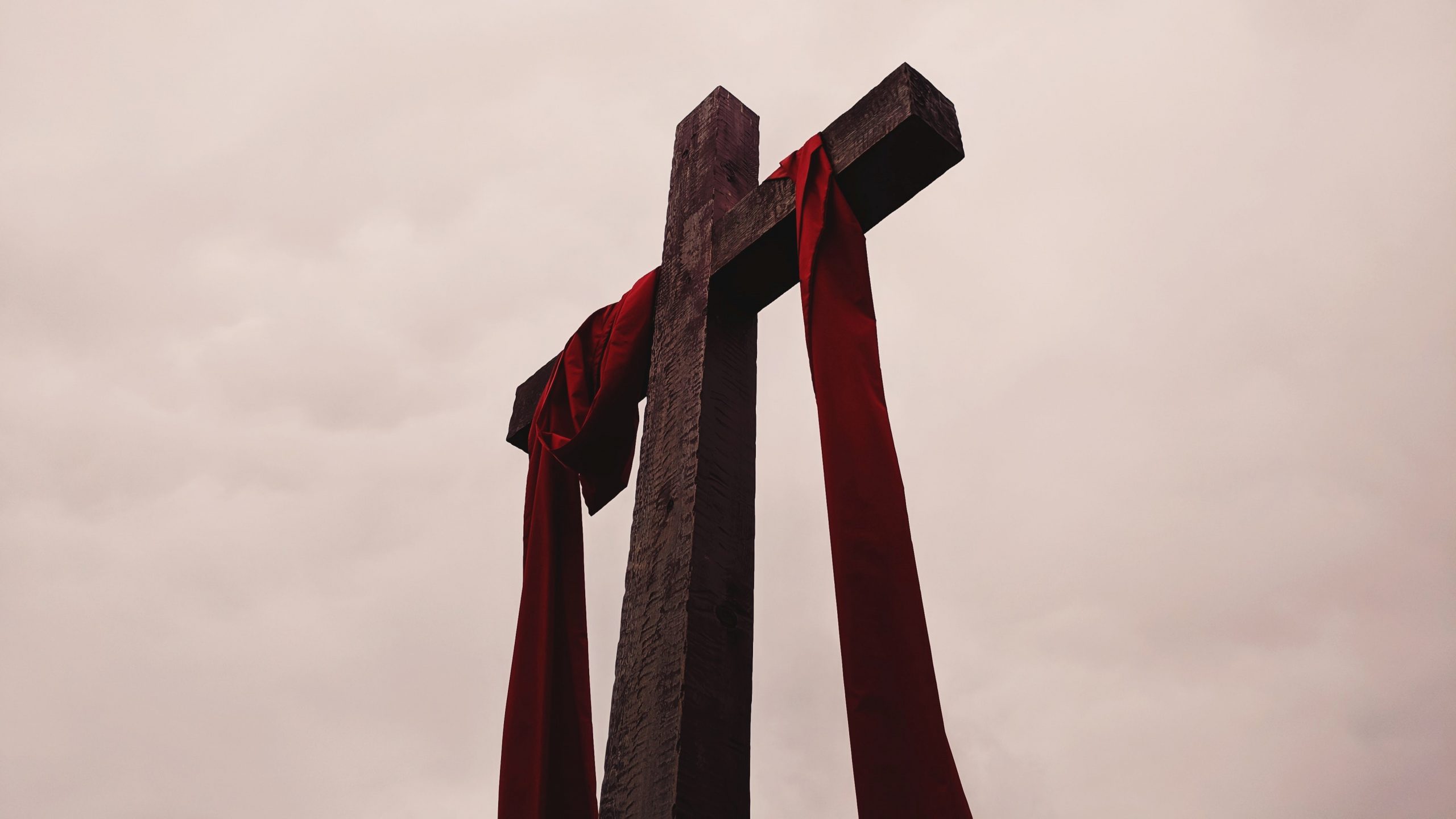
The Manistique Ministerial Association’s Good Friday Service will be held in person at the Zion Lutheran Church at 3 PM on Friday, April 15. It will also be accessible using Zoom through the link below using a smart phone, tablet, or other computer.
Join the Zoom Meeting: CLICK HERE
If you need to call in, use the information below:
Phone: +1 (312) 626-6799
Meeting ID: 906 341 5427
Passcode: 49854